Sport
Sport encompasses physical and mind activities, governed by rules.

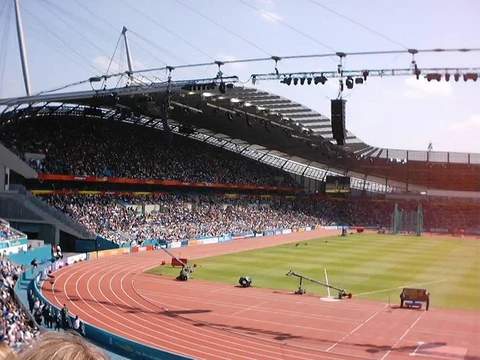
Sport is a physical activity or game, often competitive and organised, that maintains or improves physical ability and skills. It provides enjoyment to participants and entertainment to spectators, and is generally recognised as a system of activities based in physical athleticism or physical dexterity.
- definition
- Physical activity or game, often competitive and organised
- most accessible sport
- Running
- most popular spectator sport
- Association football
- governing recognition
- GAISF, IOC, Council of Europe
Lore & Background
Monuments to the Pharaohs indicate sports including swimming and fishing were well-developed in ancient Egypt, along with javelin throwing, high jump, and wrestling. Ancient Persian sports such as Zoorkhaneh had close connections to warfare skills, and polo and jousting originated there. Various traditional games of India like Kho kho and Kabaddi have been played for thousands of years, with kabaddi potentially played as preparation for hunting. A wide range of sports were established by the time of Ancient Greece, where the Olympic Games were created, held every four years in Olympia.
Reader's Guide
Sport is a broad concept with varying definitions. The Global Association of International Sports Federations (GAISF) provides criteria: sport should have an element of competition, be in no way harmful to any living creature, not rely on equipment from a single supplier, and not rely on 'luck' elements. GAISF recognises sport can be primarily physical, primarily mind (such as chess or Go), predominantly motorised, primarily co-ordination and dexterity, or primarily animal-supported. The inclusion of mind sports is not universally accepted, leading to legal challenges. The Council of Europe defines sport as 'all forms of physical activity which, through casual or organised participation, aim at expressing or improving physical fitness and mental well-being, forming social relationships or obtaining results in competition at all levels'. Sport competitions may use team or single person formats, be open or closed, allow ties or use tie-breaking methods, and be arranged in tournaments or leagues. Records of performance are often kept and reported in sport news. Sport betting is in some cases severely regulated, and in others integral to the sport.
Did You Know?
- The International Olympic Committee recognises both chess and bridge as sports.
- SportAccord recognises five non-physical sports: chess, bridge, draughts, Go, and xiangqi.
The Architecture of Competition: Sports, Disciplines, and Events
The Commonwealth Games program operates on a layered taxonomy that distinguishes between sports, disciplines, and individual events. When multiple activities fall under a single international federation, the CGF treats each activity as a discipline within the broader sport. Shooting, governed by the International Shooting Sport Federation, exemplifies this: it is one sport but encompasses four distinct disciplines—clay target, full bore, pistol, and small bore. Eleven sports in total consist of or have consisted of multiple disciplines, including aquatics, archery, athletics, basketball, cycling, gymnastics, lawn bowls, shooting, table tennis, triathlon, and wrestling. Events for elite athletes with a disability (EAD) form a separate discipline within a sport, whether the able-bodied and disabled competitions are run by different federations, as with athletics under World Athletics and the International Paralympic Committee, or by a single body, as with lawn bowls under World Bowls. This structure ensures clarity in how records, medals, and programming are allocated across the Games.
From Empire to Modernity: The Shifting Program
The sport program at the Commonwealth Games has undergone dramatic transformation since its origins. The 1930 British Empire Games, the direct precursor to the modern event, featured just six sports: athletics, aquatics (swimming and diving), boxing, lawn bowls, rowing, and wrestling. By the period between 1998 and 2022, the program had expanded into a three-tier system of core, optional, and recognised sports. Sixteen core sports and four core para-sports were mandatory at every edition, while host nations could supplement the program with optional sports and disciplines. Recognised sports occupied a middle ground—approved by the CGF but considered to need further growth before full inclusion. The CGF Charter required games to include 20 core sports, disciplines, and para-sports. In October 2021, the CGF announced a new roadmap effective from the 2030 Games, replacing the core category entirely and mandating only athletics and swimming (plus their para-sport counterparts) as compulsory, with hosts gaining freedom to select up to 17 total sports from an approved list.
The Long Road to Inclusion: Para-Sports in the Games
The integration of athletes with disability into the Commonwealth Games program was neither immediate nor straightforward. Between 1962 and 1974, Commonwealth Paraplegic Games were held directly preceding the able-bodied Games as separate events. It was not until 1994 that para-sports first appeared in the official program, and even then only as demonstration sports. Full integration into the main program did not arrive until 2002, at which point four core para-sports became mandatory at every edition. The structural relationship between able-bodied and disabled competition is codified within the CGF's taxonomy: events for elite athletes with a disability constitute a separate discipline within a sport. This applies regardless of whether the two categories are governed by different international bodies, as is the case with athletics (World Athletics versus the International Paralympic Committee), or by a single federation, as with lawn bowls under World Bowls. The 2030 roadmap further entrenches this inclusion by making para-sport counterparts of athletics and swimming compulsory alongside their able-bodied versions.
Host Nations and the Politics of the Program
The Commonwealth Games program has always reflected a negotiation between the CGF's global standards and the ambitions of individual host nations. Under the 1998–2022 framework, organising committees could select optional sports and disciplines to flesh out their edition's program. Hosts could also petition the CGF General Assembly to add up to four team sports, a provision exercised by Melbourne's committee for basketball at the 2006 Games and by Gold Coast for beach volleyball at the 2018 Games. Demonstration sports—sometimes called exhibition sports—have also featured in various editions, offering a preview of activities not yet ready for the main program. Rugby league nines competitions in 2014 and 2018 were endorsed by the CGF but deliberately kept outside the official demonstration category. The 2030 roadmap amplifies host autonomy considerably: with the core category abolished, each host gains complete freedom to assemble their program from a pre-approved list, capped at 17 sports, and may even propose additional sports that respect local demands.
Frequently Asked Questions
What is Sport?
Sport refers to any structured physical activity or competitive game that challenges a person's athleticism or dexterity. It serves both as a way for participants to stay fit and as entertainment for those watching.
What is the most accessible sport in the world?
Running holds that title, since it requires no equipment, special venue, or team to get started. It is the easiest physical activity for virtually anyone to pick up and practice.
What is the most popular spectator sport globally?
Association football (soccer) tops the list as the sport that draws the largest audiences of onlookers worldwide. Its simple rules and universal appeal make it the go-to choice for stadium and TV spectators.
More in Sports & Games 1-23
Spotted an error? Know more?
This is a living reference — every entry is fact-audited, and reader corrections feed straight into our audit queue. Suggest an edit · See this site's audit record